Long-distance drives often reveal aspects of a vehicle that remain unnoticed in daily city use. The Kia Carens Clavis, tested over a 350 km round trip to Trimbakeshwar, provided a clearer picture of its strengths and limitations when driven in real-world highway conditions with passengers and luggage.
This review focuses on its highway behaviour, comfort, practicality, and overall ownership experience.
The tested model is positioned as a premium six-seater MPV with a turbo-petrol engine and dual-clutch transmission.
| Detail | Information |
|---|---|
| Make | Kia |
| Model | Carens Clavis |
| Variant | HTX+ Six-Seater |
| Engine | 1.5L Turbo Petrol |
| Power | 158 bhp |
| Torque | 253 Nm |
| Transmission | 7-speed DCT |
| Price | Rs. 24.55 lakh (OTR, Mumbai) |
| Mileage | 15.7 kmpl (MID, Eco mode) |
The vehicle is designed primarily as a family-oriented MPV with a focus on comfort and usability.
Cabin
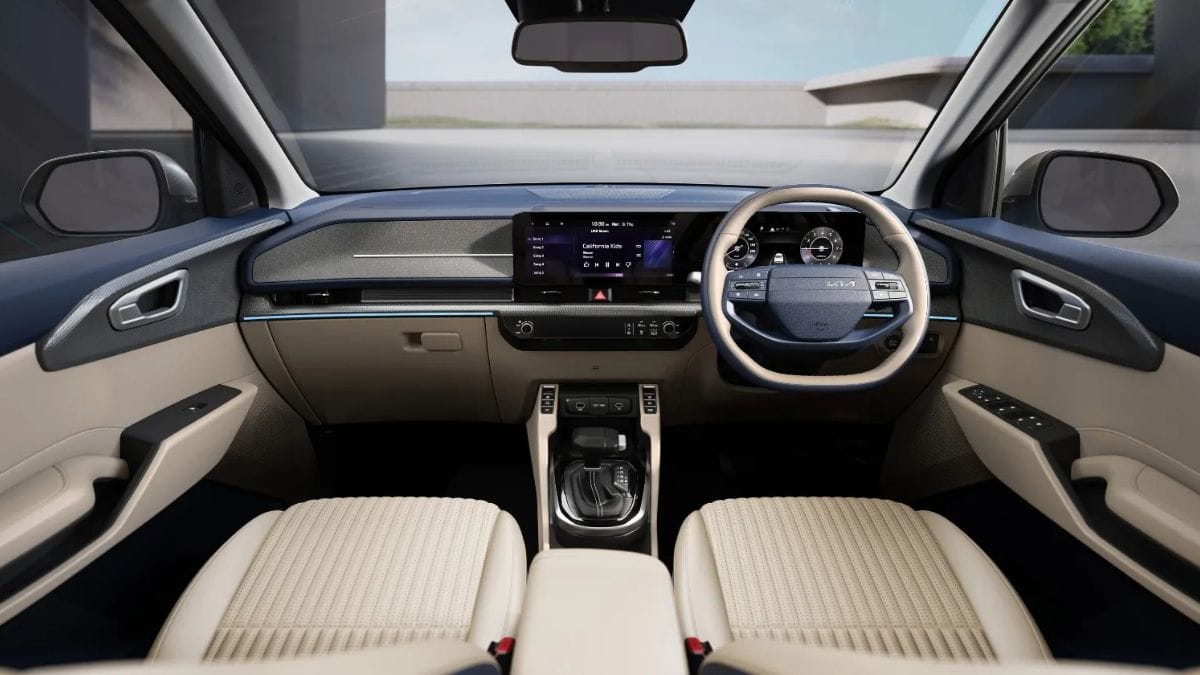
The interior of the Carens Clavis reflects a balanced approach between aesthetics and functionality. The Triton Navy and Beige theme enhances the sense of space without appearing excessive.
The dual 12.3-inch displays form the centrepiece of the dashboard, offering a cohesive and modern interface. The textured dashboard finish reduces glare, which becomes particularly relevant during long daytime drives.
The panoramic sunroof and large windows contribute to an open and airy cabin feel. Even with all three rows occupied, the space does not feel restrictive, which is important for extended journeys.
Comfort
Passenger comfort remains a key strength of the Clavis, particularly on highways. The second row is equipped with practical additions such as tray tables, roof-mounted AC controls, sunblinds, and multiple charging options.
The airflow from the air conditioning system is well distributed, avoiding direct discomfort while maintaining consistent cooling across rows.
The third row offers usable space for adults, with sufficient legroom and visibility. While under-thigh support could be improved, overall comfort remains adequate even for longer durations.
Some minor concerns include a fixed second-row armrest angle and occasional noise from small storage areas on uneven roads.
Usability
Ergonomics are handled effectively, with clearly labelled controls and an intuitive layout. The infotainment system responds consistently, although slight delays can occur when navigating deeper menus.
The absence of wireless Android Auto and Apple CarPlay may be inconvenient for some users, especially given the otherwise modern feature set.
The 360-degree camera system enhances usability in tight spaces, such as fuel stations or parking areas along highways. Visibility from the driver’s seat is also a strong point, aided by large glass areas and well-designed pillars.
However, the lack of lumbar support and an adjustable front armrest may become noticeable during extended driving sessions.
Space
Boot space is practical for everyday use with all three rows in place, accommodating soft luggage without difficulty.
For longer trips requiring additional luggage, folding the third row significantly improves storage capacity. This flexibility makes the vehicle suitable for both daily commuting and extended travel.
The absence of an electrically operated tailgate is a notable omission, especially when handling heavier luggage.
Performance
The 1.5-litre turbo-petrol engine offers varying characteristics depending on the selected drive mode.
- Eco mode prioritises efficiency and delivers a relaxed driving experience
- Normal mode provides balanced performance suitable for highways
- Sport mode improves responsiveness for overtaking
The 7-speed DCT operates smoothly under steady conditions. Gear shifts are generally well-calibrated, although the transmission tends to delay reaching the highest gear until higher speeds.
Fuel efficiency during the test drive reached a peak of 16.9 kmpl and settled at 15.7 kmpl. This figure may vary depending on driving mode and conditions, with slightly lower efficiency observed in Normal and Sport modes.
Ride
Ride quality is tuned for comfort. The suspension absorbs road imperfections effectively, including expansion joints and uneven patches commonly encountered on highways.
While body roll is present during cornering, it does not compromise overall stability. The vehicle remains composed at cruising speeds, aligning with its intended purpose as a family-oriented MPV.
Ground clearance is sufficient for typical road conditions, with no scraping observed during the test.
Safety
The inclusion of Level 2 ADAS features adds to the overall safety profile. Adaptive cruise control helps reduce driver fatigue during long highway stretches by maintaining speed and distance automatically.
Additional features such as rear cross-traffic alert improve safety in parking scenarios and low-speed manoeuvres.
Cabin insulation could be improved at higher speeds, although it does not significantly affect the overall driving experience.
Verdict
The Kia Carens Clavis demonstrates a clear focus on comfort, practicality, and ease of use rather than performance-oriented driving. On highways, it delivers a composed and predictable experience, making it suitable for long-distance family travel.
It does not aim to offer sharp handling or dynamic performance. Instead, it prioritises passenger comfort, driver ease, and consistent usability across varying conditions.
After extended usage, the Clavis stands out as a well-rounded MPV capable of handling both daily requirements and longer journeys without significant compromise. Its strengths lie in its ability to deliver a relaxed and fatigue-free driving experience, which remains a key consideration for buyers in this segment.
FAQs
What is the mileage of Carens Clavis?
Around 15.7 kmpl in Eco mode.
Is it good for highways?
Yes, it offers comfort and stability.
Does it have ADAS features?
Yes, it includes Level 2 ADAS.
How many seats does it have?
It is available as a six-seater.
Is boot space sufficient?
Yes, especially with third row folded.