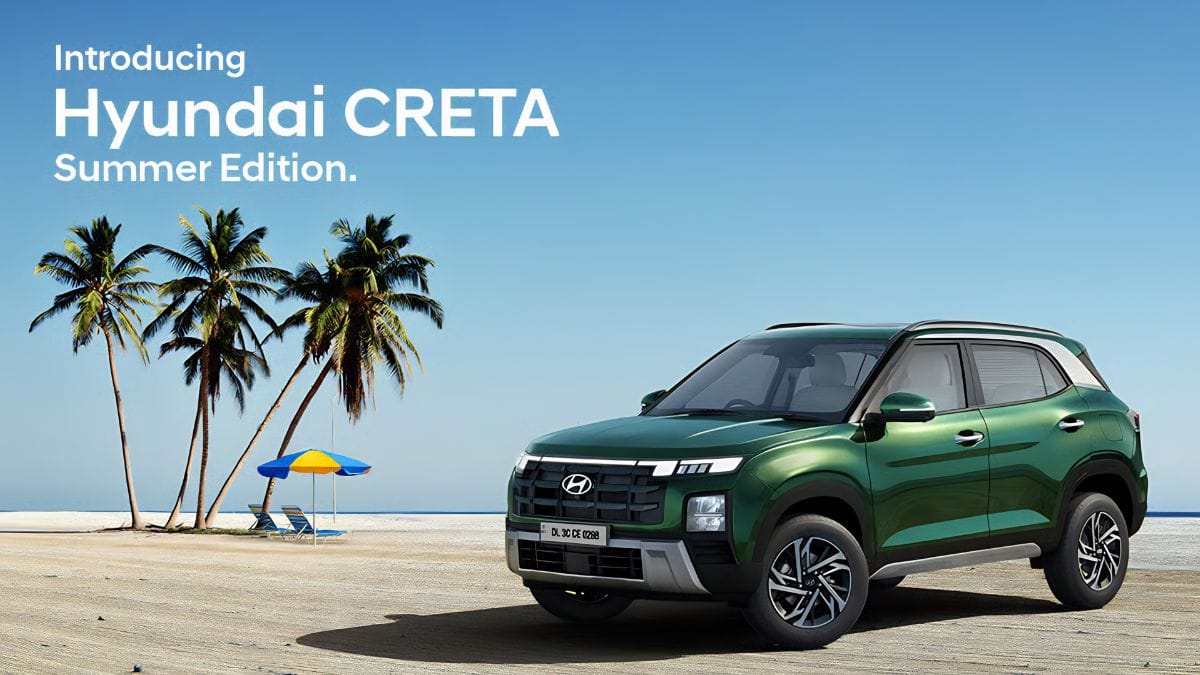
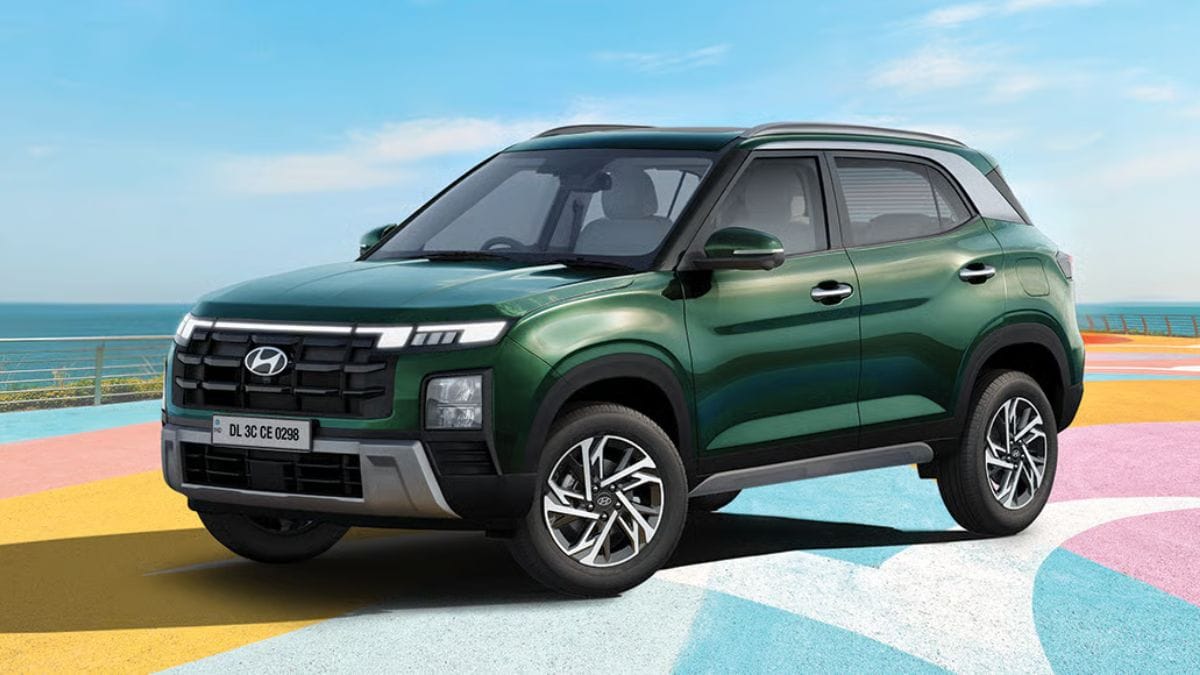
Hyundai has introduced the Creta Summer Edition in India, with prices starting at Rs. 12.06 lakh (ex-showroom). At a glance, the update may appear minimal, offering only a few cosmetic enhancements and practical additions such as rear sunshades. However, the purpose of this release becomes clearer when viewed in the context of product lifecycle management, competition, and upcoming regulatory changes.
The Hyundai Creta has remained one of the most consistent performers in the compact SUV segment. Even as new models enter the market, the Creta continues to maintain strong monthly sales. This raises an important question – why introduce a special edition when the model is already performing well?
Demand
Recent sales data indicates that the Creta, including its electric variant, averages close to 18,000 units per month. More importantly, this figure has remained stable, with negligible decline over recent months. This suggests that Hyundai is not reacting to falling demand.
Instead, the company appears to be focusing on sustaining interest in an already successful product.

Purpose
Special editions such as the Summer Edition are typically not introduced to address major shortcomings. Rather, they serve as incremental updates designed to maintain visibility and consumer interest.
In the case of the Creta Summer Edition, the changes are limited. However, even small updates can influence buyer perception. A new edition can make the product feel current without requiring a full redesign.
This approach allows manufacturers to extend the appeal of an existing model while keeping development costs under control.
Timing
The timing of this release is particularly relevant. The current generation Creta received its last major update in the form of a facelift more than two years ago.

A simplified timeline helps explain the situation:
| Event | Timeline |
|---|---|
| Last facelift | Over 2 years ago |
| Summer Edition launch | 2026 |
| Next-generation model | Expected around 2027 |
This period between a facelift and a full model change is often referred to as the mid-cycle phase. During this phase, manufacturers typically rely on limited updates to maintain market relevance.
Strategy
Hyundai has consistently used special editions to manage the lifecycle of the Creta. Previous examples include the Knight Edition and other themed variants.
These editions serve multiple purposes:
- They introduce minor visual and feature updates
- They create a sense of novelty for potential buyers
- They help the model remain visible in a competitive market
Importantly, these updates do not require significant engineering changes, making them cost-effective.
Competition
The compact SUV segment continues to evolve, with frequent launches and updates from competing brands. Buyers in this segment increasingly expect modern features, updated styling, and strong value propositions.
In such an environment, even a well-established model like the Creta can appear dated if left unchanged for too long.
By introducing periodic updates, Hyundai ensures that the Creta remains part of ongoing market discussions.
Future
Looking ahead, the next-generation Creta is expected to bring more substantial changes. Industry expectations suggest that Hyundai will adopt the newer K3 platform, which is already used in the latest Kia Seltos.
In addition, hybrid powertrains are likely to be introduced. These changes would represent a significant shift compared to the current model.
Efficiency
The move towards hybrid technology is closely linked to regulatory requirements. India’s Corporate Average Fuel Efficiency (CAFE) norms are set to become stricter with the introduction of CAFE III standards from April 2027.
Manufacturers will need to improve overall fleet efficiency to comply with these regulations.
Key advantages of hybrid systems include:
| Factor | Benefit |
|---|---|
| Hybrid powertrain | Improved fuel efficiency |
| Lower emissions | Better regulatory compliance |
| Reduced fuel use | Long-term cost benefits |
These developments indicate that the next-generation Creta will focus not only on features but also on efficiency and sustainability.
Appeal
The Creta Summer Edition does not introduce major mechanical or technological changes. Its role is more subtle. It helps maintain the model’s relevance during the later stages of its current lifecycle.
Such updates ensure that the Creta continues to attract attention, even as the market evolves and competitors introduce new products.
In that sense, the Summer Edition is part of a broader strategy rather than a standalone upgrade.
The introduction of the Creta Summer Edition reflects Hyundai’s measured approach to product management. Instead of waiting for demand to decline, the company is taking proactive steps to sustain interest in a key model.
While the changes may appear limited, they serve a clear purpose in maintaining visibility and bridging the gap until the arrival of the next-generation Creta, expected around 2027.
FAQs
What is Creta Summer Edition price?
Starts at Rs. 12.06 lakh ex-showroom.
What changes in Summer Edition?
Minor cosmetic updates and sunshades.
Is Creta sales declining?
No, sales remain stable.
When is next Creta launch?
Expected around 2027.
Will Creta get hybrid engine?
Yes, hybrid option is expected.