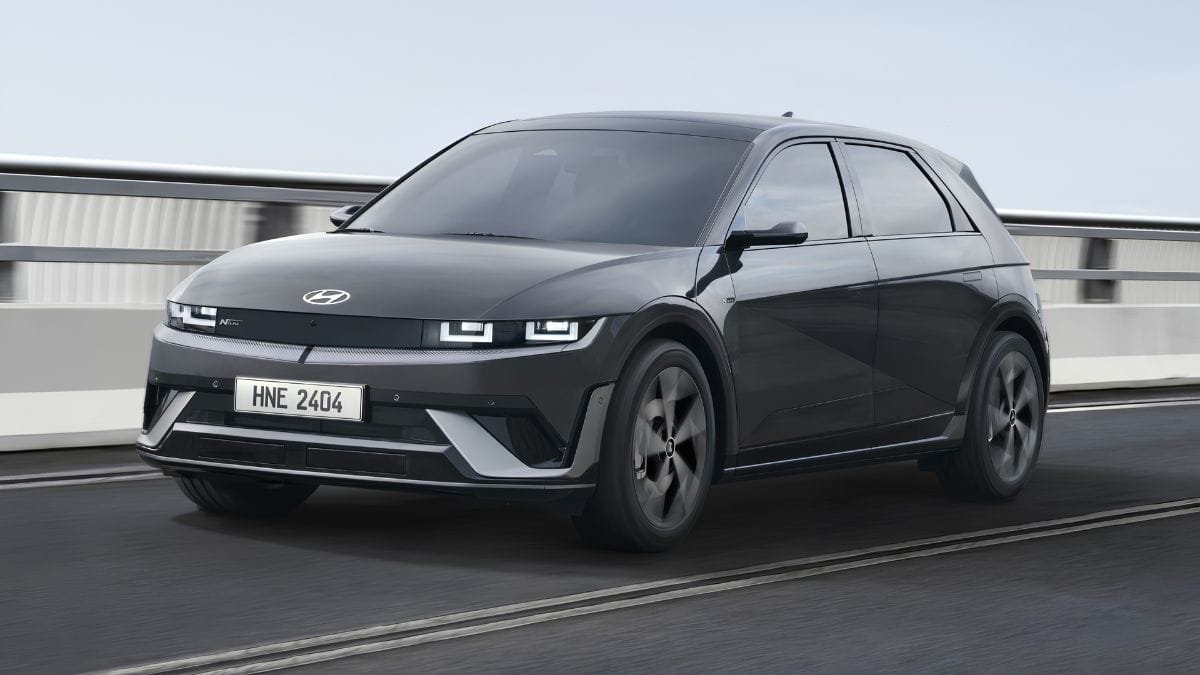
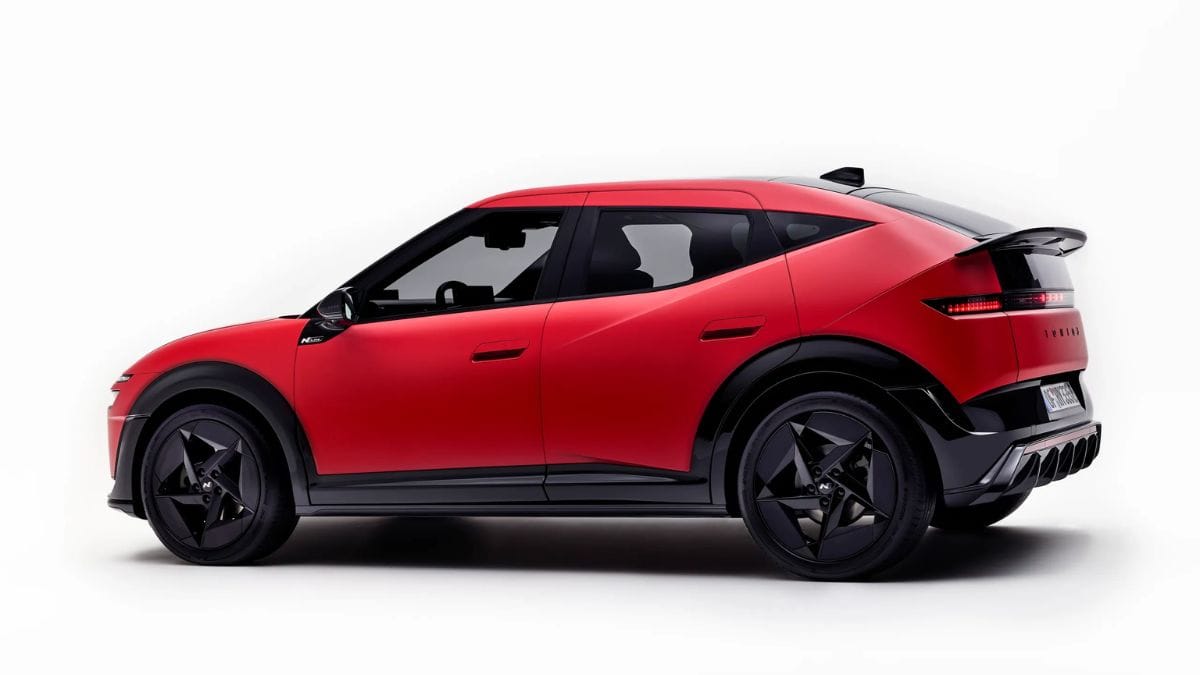
Hyundai’s unveiling of the Ioniq 3 for the European market brings attention to a key figure – a claimed range of up to 496km (WLTP). For a compact hatchback, this level of efficiency places it among the more capable small electric vehicles currently available. However, despite the impressive specifications, its relevance to the Indian market remains limited at this stage.
Range
The headline figure of nearly 500km is achieved through a 61kWh battery pack. This is relatively modest in size compared to larger EVs that deliver similar range figures. The result reflects Hyundai’s focus on efficiency rather than simply increasing battery capacity.
A drag coefficient of 0.263 contributes significantly to this outcome. Combined with weight optimisation and aerodynamic design, the Ioniq 3 demonstrates how engineering improvements can enhance usable range without relying solely on larger batteries.
Efficiency
The Ioniq 3 is designed with an efficiency-first approach. Instead of prioritising outright performance, Hyundai has focused on delivering consistent real-world usability.
This strategy aligns well with European driving conditions, where shorter commutes and well-developed charging networks support such vehicles. The balance between battery size and efficiency allows for lower energy consumption while maintaining practical range.
A brief overview of key figures:
| Parameter | Hyundai Ioniq 3 |
|---|---|
| Battery Capacity | 61kWh |
| Claimed Range | Up to 496km (WLTP) |
| Drag Coefficient | 0.263 |
| Segment | Compact Hatchback |
Pricing
One of the primary challenges for India would be pricing. Even if Hyundai considers local assembly, the cost of advanced EV platforms, high-density battery systems, and premium interior technology would likely position the car above Rs. 25 lakh.
This creates a mismatch with current market demand. In India, hatchbacks at this price point do not see significant traction. Buyers in this segment tend to prefer SUVs, which are perceived to offer better value in terms of size, presence, and practicality.
Demand
Consumer preferences in India differ notably from those in Europe. While compact hatchbacks remain popular in European markets, Indian buyers increasingly favour compact and mid-size SUVs, especially in higher price brackets.
As a result, even a technologically advanced hatchback like the Ioniq 3 may struggle to find a strong customer base. The body style itself becomes a limiting factor, regardless of the vehicle’s efficiency or range.
Infrastructure
Charging infrastructure remains another key consideration. Although a 500km range may appear to address range anxiety, the broader issue in India is access to reliable charging networks.
Fast charging stations are still concentrated in major cities and along select highways. Outside these areas, availability can be inconsistent. Most EV owners continue to rely on home charging, which reduces the immediate advantage of a larger battery pack.
In such conditions, the added cost of extended range does not always translate into proportionate real-world benefits for the average user.
Market
The Ioniq 3 highlights a broader gap between global EV advancements and the realities of the Indian automotive market. Manufacturers are developing highly efficient electric vehicles for regions with mature infrastructure and different consumer expectations.
For India, factors such as localisation, cost optimisation, and infrastructure development play a more significant role in determining viability. Without substantial local manufacturing and component sourcing, vehicles like the Ioniq 3 remain difficult to position competitively.
Outlook
Hyundai’s capability to produce efficient and well-engineered EVs is evident with the Ioniq 3. However, bringing such a product to India would require considerable adaptation, both in terms of pricing strategy and market positioning.
Until there is stronger alignment between cost structures, infrastructure readiness, and consumer demand, vehicles of this nature are likely to remain limited to international markets rather than becoming mainstream options in India.
FAQs
What is the range of Hyundai Ioniq 3?
Up to 496km based on WLTP cycle.
What battery does the Ioniq 3 use?
It uses a 61kWh battery pack.
Will Ioniq 3 launch in India?
It is unlikely in the near term.
Why is it expensive for India?
High EV tech and battery costs increase price.
Is 500km range useful in India?
Limited due to charging infrastructure gaps.