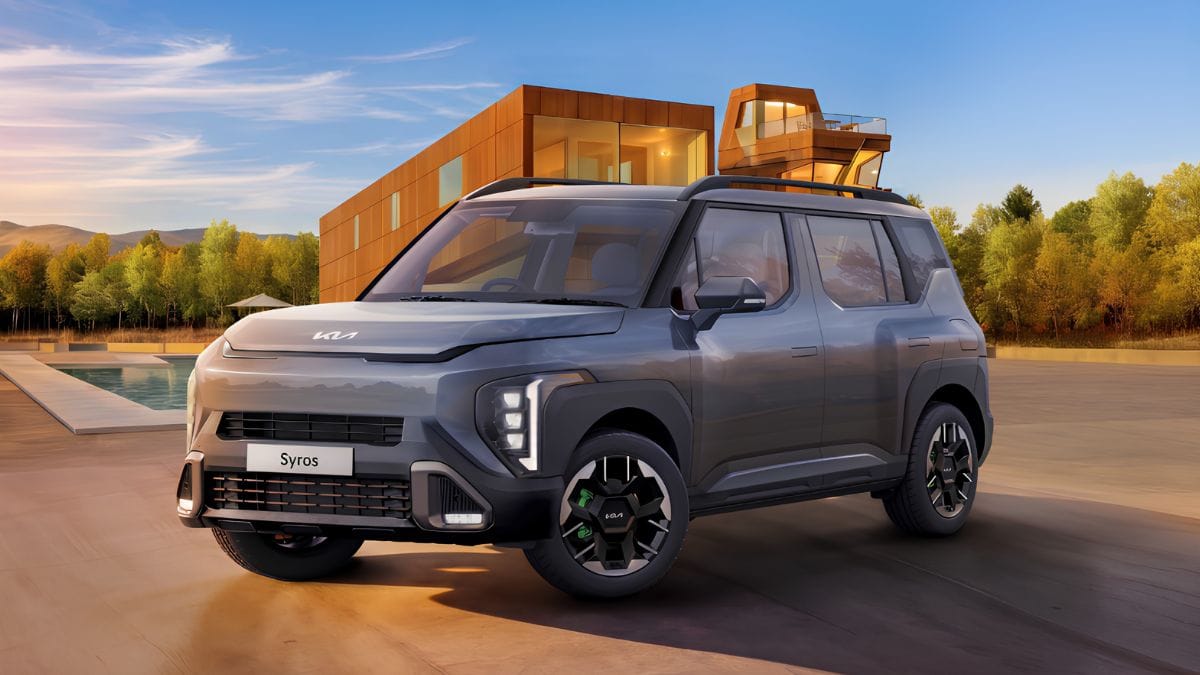
The Kia Syros MY26 update may appear to be a standard mid-cycle refresh, but a closer look suggests a more deliberate recalibration. While design tweaks and new trims are part of the update, the more significant changes lie in pricing, variant distribution, and feature accessibility.
These adjustments indicate that Kia is refining the Syros to better align with market expectations rather than simply enhancing its appeal.
Pricing
The revised starting price of Rs. 8.40 lakh marks a notable shift in positioning. Lowering the entry point is often a strategic move aimed at expanding the vehicle’s reach within a competitive segment.
In practical terms, this adjustment makes the Syros more accessible to first-time buyers and those comparing multiple options in a price-sensitive category. A lower base price does not necessarily change the product itself, but it alters how the product is perceived in relation to its competitors.

This shift also suggests that the earlier pricing may have limited the model’s potential audience. By repositioning the entry point, Kia is addressing that constraint and attempting to improve market penetration.
Variants
The introduction of additional trims such as HTE, HTE(O), HTK+(O), and HTX(O) reflects a more granular approach to variant planning. Rather than offering broad steps between trims, Kia has opted to create more intermediate options.
This approach helps reduce gaps that can arise when buyers are forced to choose between under-equipped and over-priced variants. A more evenly distributed lineup allows customers to select configurations that better match their preferences and budgets.
The revised structure can be understood as follows:

| Variant | Positioning |
|---|---|
| HTE | Entry-level offering focused on affordability |
| HTE(O) | Entry variant with essential added features |
| HTK+(O) | Mid-range option balancing cost and features |
| HTX(O) | Higher trim with extended features at a controlled price |
By expanding the lineup, Kia is responding to varied buyer expectations within the same segment. This is particularly relevant in markets where customization through variant selection plays a key role in purchase decisions.
Features
Another key change is the redistribution of features across variants. Previously, certain features may have been concentrated in higher trims, limiting their availability to a narrower group of buyers.
With the MY26 update, Kia has made an effort to offer important features across a wider range of variants. This improves the perceived value of mid-level trims, which typically account for a significant portion of overall sales.
A more balanced feature spread reduces the need for buyers to stretch their budgets to access commonly desired equipment. It also enhances competitiveness against rival models that may already offer similar features at lower price points.
Diesel
The expansion of diesel automatic options is another notable development. Powertrain and transmission combinations are often influenced by customer demand, and the addition of these variants suggests that there was a gap in the earlier lineup.
Diesel engines continue to appeal to buyers prioritizing fuel efficiency and long-distance usability. Combining this with automatic transmission adds convenience, especially in urban driving conditions.
By introducing more diesel automatic configurations, Kia is addressing a specific requirement that may have previously led potential buyers to consider alternative models.
Design
The MY26 update also includes visual changes such as revised bumpers, new alloy wheel designs, and additional color options. These updates contribute to a refreshed appearance, ensuring that the model remains visually competitive.
However, within the broader context of this update, design changes appear to play a secondary role. They support the repositioning effort by maintaining visual relevance, but the primary focus remains on structural improvements in pricing and product planning.
Strategy
Taken together, the updates indicate a shift from simple product enhancement to strategic realignment. Kia appears to have evaluated how the Syros was positioned in the market and made targeted adjustments to address specific gaps.
Three areas stand out in this recalibration:
- Entry pricing has been adjusted to improve accessibility
- Variant structure has been expanded to reduce selection gaps
- Feature distribution has been improved to enhance value across trims
These changes suggest that Kia is responding to market feedback and competitive pressures rather than introducing changes for incremental improvement alone.
Impact
In a competitive segment where buyers often compare multiple models within a narrow price range, factors such as pricing structure, feature availability, and variant flexibility can significantly influence decisions.
The MY26 update positions the Syros as a more balanced offering. A lower starting price increases initial consideration, while a wider variant range and improved feature distribution strengthen its value proposition.
Such adjustments do not alter the core identity of the vehicle, but they improve how it fits within the market landscape. For many buyers, this alignment between expectations and offering is a critical factor in the final purchase decision.
Overall, the Kia Syros MY26 update reflects a measured and structured approach to product refinement. Rather than introducing extensive changes, Kia has focused on areas that directly affect buyer perception and usability. This approach indicates an emphasis on responsiveness and adaptability within a competitive automotive environment.
FAQs
What is the starting price of Kia Syros MY26?
It starts at Rs. 8.40 lakh.
What new variants are introduced?
HTE, HTE(O), HTK+(O), HTX(O).
Are diesel automatic options available?
Yes, more options are now offered.
What is the key update in features?
Features are spread across more variants.
Is this a full redesign?
No, it is a mid-cycle update.