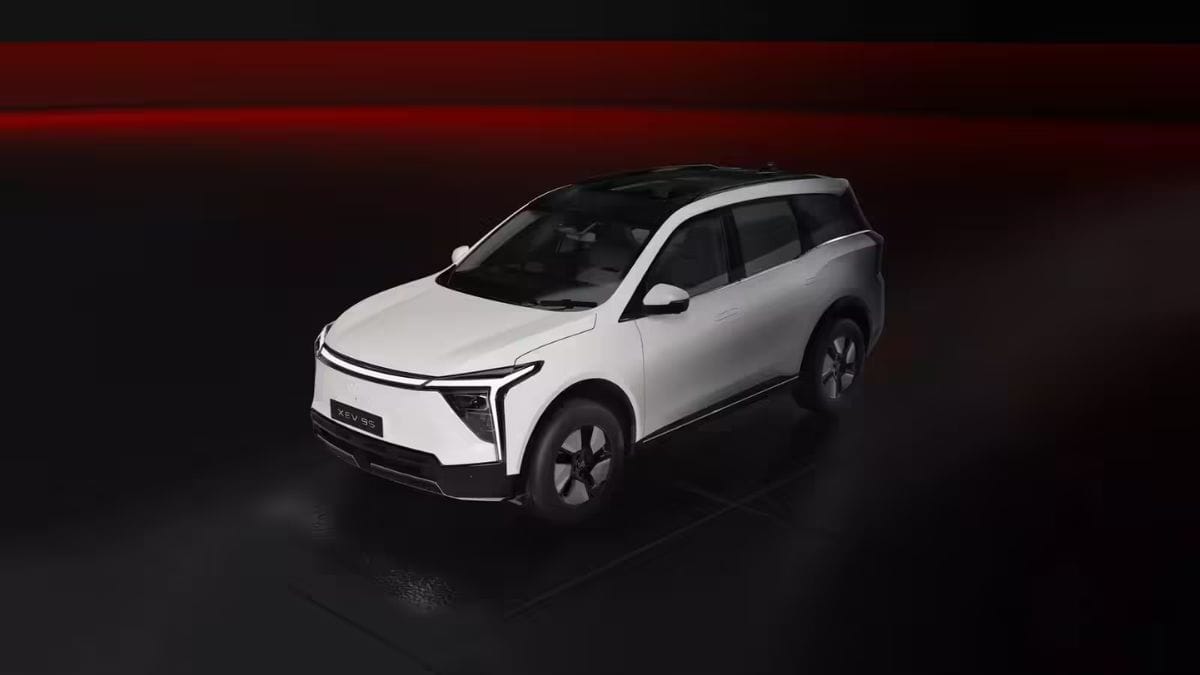
The Mahindra XEV 9S has entered the growing electric SUV segment with a focus on practicality, range, and efficiency. In a recent real-world range test, the vehicle’s top-spec variant was evaluated to understand how it performs outside controlled conditions. While manufacturers often publish optimistic figures, real-world testing provides a clearer picture of everyday usability.
The XEV 9S is offered with three battery pack options, with the 79 kWh version being the most capable. This particular variant, positioned at approximately Rs. 30 lakh (ex-showroom), claims a driving range of 679 km on a full charge. The key question, however, is how much of that range is achievable under typical driving conditions.
The tested model was the 79 kWh Pack Three Above variant, which represents the higher end of the lineup. It is designed as a family-oriented electric SUV, combining space with long-distance capability.
Here is a quick snapshot of the specifications relevant to the test:
| Specification | Details |
|---|---|
| Battery Capacity | 79 kWh |
| Claimed Range | 679 km |
| Tested Range | 510 km |
| Efficiency | ~7 km per kWh |
| Price (Ex-showroom) | Rs. 30 lakh (approx.) |
Results
In real-world conditions, the XEV 9S delivered a range of approximately 510 km on a full charge. This translates to around 75 percent of the claimed range.
Within the context of EV performance in India, this figure is consistent with established benchmarks. Most electric vehicles from domestic manufacturers typically achieve between 70 and 75 percent of their certified range when tested under mixed driving conditions. The XEV 9S, therefore, aligns well with expectations and does not show a significant deviation.
Context
Range figures in electric vehicles are influenced by several variables, including driving style, traffic conditions, terrain, and climate. Certified figures are usually obtained under standardized testing cycles, which may not fully reflect real-world usage.
A real-world range of over 500 km places the XEV 9S in a competitive position within its segment. For most users, this range is sufficient for both daily commuting and occasional long-distance travel without frequent charging stops.

Highway
One of the more notable aspects of the test was the vehicle’s performance under highway conditions. Electric vehicles typically achieve better efficiency in urban environments due to lower speeds and the benefits of regenerative braking.
Highway driving presents a different challenge. Sustained higher speeds reduce the opportunity for energy recovery and generally increase power consumption.
During the test, the XEV 9S was driven at a steady speed between 90 and 100 kmph. Under these conditions, the vehicle maintained an efficiency of approximately 7 km per kWh. This indicates that the drop in efficiency at higher speeds was controlled and not significantly lower than its overall performance.
Efficiency
An efficiency figure of around 7 km per kWh is considered competitive for a vehicle of this size and weight. It suggests that the powertrain has been calibrated to balance performance and energy consumption effectively.

The relatively stable efficiency across different driving conditions points to optimized thermal management and battery utilization. It also reflects consistency in energy delivery, which is important for predicting range accurately during long trips.
Comparison
When compared with other electric vehicles in a similar price bracket, the XEV 9S holds its ground in terms of both range and efficiency.
| Parameter | Typical EV Range | XEV 9S Result |
|---|---|---|
| Claimed vs Real | 70-75% | ~75% |
| Highway Efficiency | Moderate drop | Minimal drop |
| Practical Range | 400-500 km | ~510 km |
This comparison highlights that the XEV 9S not only meets expected benchmarks but also demonstrates stable highway performance, which is not always common in this segment.
Practicality
From a usability perspective, a real-world range of 510 km reduces range anxiety for most users. It allows for longer trips with fewer charging interruptions, especially when supported by a growing charging infrastructure.
For urban users, the efficiency gains from stop-and-go traffic and regenerative braking would likely extend usable range further in certain conditions. Meanwhile, highway users benefit from the vehicle’s ability to maintain efficiency even at steady cruising speeds.
Outlook
The results from this test suggest that the Mahindra XEV 9S has been engineered with a practical approach to range and efficiency. Rather than focusing solely on achieving high certified numbers, the vehicle delivers performance that translates well into real-world scenarios.
Its highway efficiency, in particular, indicates that it is suitable for a broader range of use cases, including intercity travel. This could make it a viable option for buyers seeking an electric SUV that does not compromise on usability outside urban environments.
Overall, the XEV 9S demonstrates a balanced performance profile. Its real-world range aligns with expectations, and its efficiency under varied conditions supports its positioning as a practical and dependable electric vehicle in the mid-size SUV segment.
FAQs
What is the real-world range of XEV 9S?
It delivers around 510 km on a full charge.
How efficient is it on highways?
It achieves about 7 km per kWh at 90-100 kmph.
What battery was tested?
The 79 kWh top-spec variant was tested.
Is 75% range typical for EVs?
Yes, most EVs achieve 70-75% of claimed range.
What is its claimed range?
It has a claimed range of 679 km.