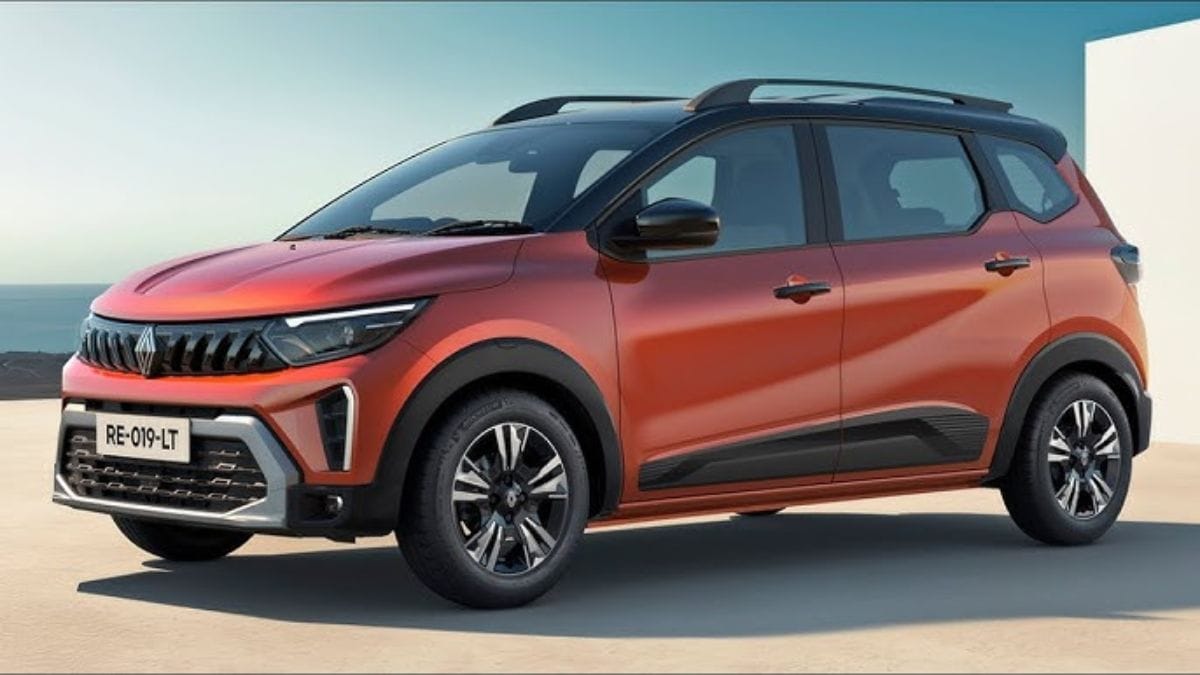
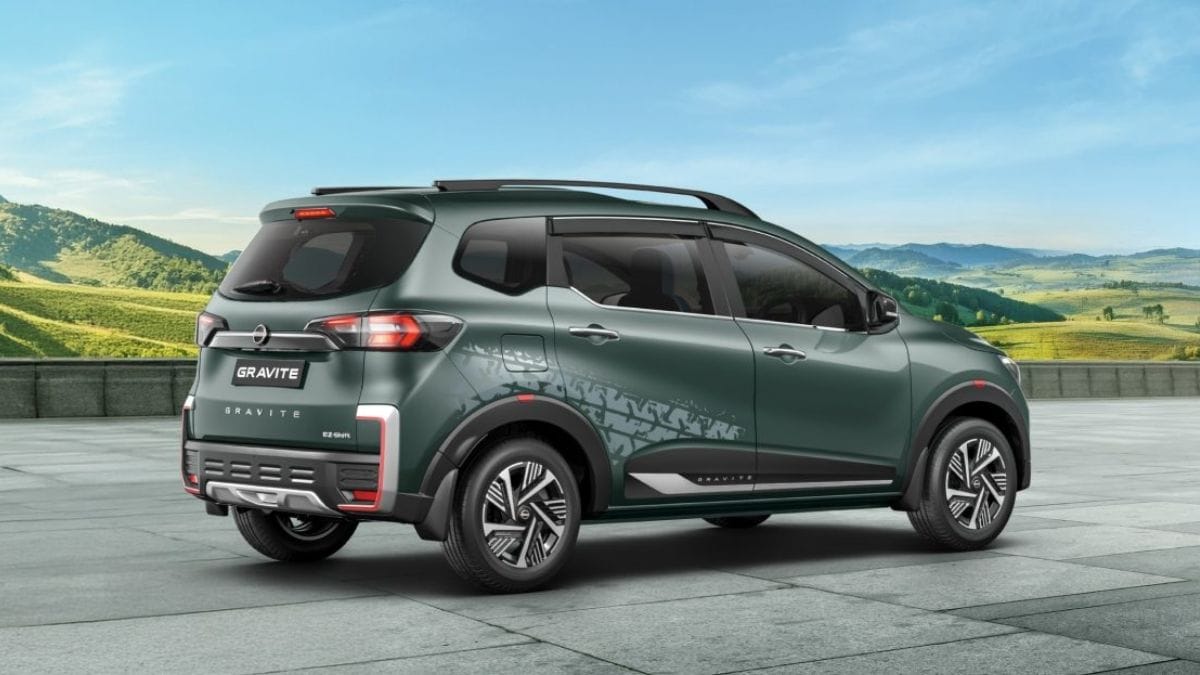
The recently introduced Nissan Gravite has undergone real-world fuel efficiency testing, offering a clearer picture of how the MPV performs outside laboratory conditions. The Gravite shares its platform and powertrain with the Renault Triber, but it arrives with Nissan’s design approach and slight tuning differences.
The tested model was equipped with a 1.0-litre naturally aspirated petrol engine paired with a five-speed manual gearbox. While the official ARAI fuel efficiency figure stands at 19.3 kmpl, real-world testing often reveals different results depending on driving conditions. Our evaluation focused on both city and highway usage to determine how the Gravite performs in everyday driving situations.
Engine
The Nissan Gravite uses a 1.0-litre three-cylinder naturally aspirated petrol engine. This engine is already familiar in the segment as it is shared with the Renault Triber. It is paired with a five-speed manual transmission, which remains the more driver-focused option in the lineup.
In everyday use, the engine feels reasonably responsive for a compact MPV. Despite its modest displacement, it manages city traffic without appearing underpowered. The power delivery is smooth, making it suitable for daily commuting and family use.
Efficiency
Nissan claims an ARAI-certified mileage of 19.3 kmpl for the manual variant. However, real-world testing generally provides a more realistic estimate of fuel consumption.
The results from our tests are shown in the table below.
| Driving Condition | Tested Mileage |
|---|---|
| City | 10.67 kmpl |
| Highway | 17.82 kmpl |
| Combined Average | 12.45 kmpl |
City driving tends to produce lower fuel efficiency due to traffic conditions, frequent stops, and slow-moving traffic. Highway conditions allow the engine to operate at more consistent speeds, which helps improve mileage.
The combined fuel efficiency of 12.45 kmpl reflects typical mixed driving conditions.

Display
Interestingly, the car’s Multi-Information Display (MID) showed lower fuel efficiency figures than those recorded during testing. The MID data during the evaluation was as follows.
| Driving Condition | MID Display |
|---|---|
| City | 9.5 kmpl |
| Highway | 14.4 kmpl |
The difference suggests that the MID may provide conservative estimates rather than exact measurements. Such variations are not uncommon and can depend on driving patterns and calculation methods used by the vehicle’s onboard system.
Driving
Beyond fuel efficiency, the Gravite offers a driving experience that feels comfortable for urban conditions. During testing, the engine appeared lively enough for regular driving needs.
Acceleration from a standstill felt smooth, and the vehicle did not struggle in typical traffic scenarios. The engine and gearbox combination worked well together, allowing easy progress in city traffic.

The five-speed manual gearbox delivered smooth shifts without abrupt jerks. This contributes to a relatively relaxed driving experience, especially in stop-and-go traffic conditions.
Handling
Another aspect that stands out is the steering setup. The Gravite features light steering, which makes manoeuvring the three-row MPV easier in tight spaces.
This characteristic is particularly useful in crowded city environments where frequent turning and parking are required. The light steering also reduces driver fatigue during longer city drives.
Despite being a three-row vehicle, the Gravite does not feel overly large while navigating narrow streets or parking areas.
Comparison
Although the Gravite shares its mechanical foundation with the Renault Triber, the driving impression feels slightly different. The engine appeared somewhat more eager during initial tests, though the overall mechanical package remains largely similar.
Such differences can come from minor tuning changes or simply variations in driving perception during testing.
AMT
At present, the manual version has been evaluated for real-world fuel efficiency. However, the performance of the AMT variant remains to be seen.
The automated manual transmission used in the Renault Triber received mixed feedback due to shift delays and driving smoothness. It will be necessary to test the Gravite’s AMT variant separately to determine whether any improvements have been made.
Until then, the manual version appears to be the more predictable choice for buyers seeking consistent performance.
The Nissan Gravite enters the MPV segment with familiar mechanicals and a practical approach to everyday driving. While its real-world fuel efficiency falls below the official ARAI figure, the results remain typical for vehicles in this category under mixed driving conditions.
The engine feels responsive enough for city use, the gearbox is smooth, and the light steering adds to its practicality. Overall, the Gravite presents itself as a functional three-row MPV designed primarily for daily commuting and family mobility.
FAQs
What engine does the Nissan Gravite use?
It uses a 1.0-litre petrol engine.
What is the ARAI mileage of Gravite?
The claimed mileage is 19.3 kmpl.
What mileage was recorded in city tests?
City mileage was 10.67 kmpl.
What highway mileage was recorded?
Highway mileage was 17.82 kmpl.
Does Gravite share engine with Triber?
Yes, it shares the same 1.0L engine.