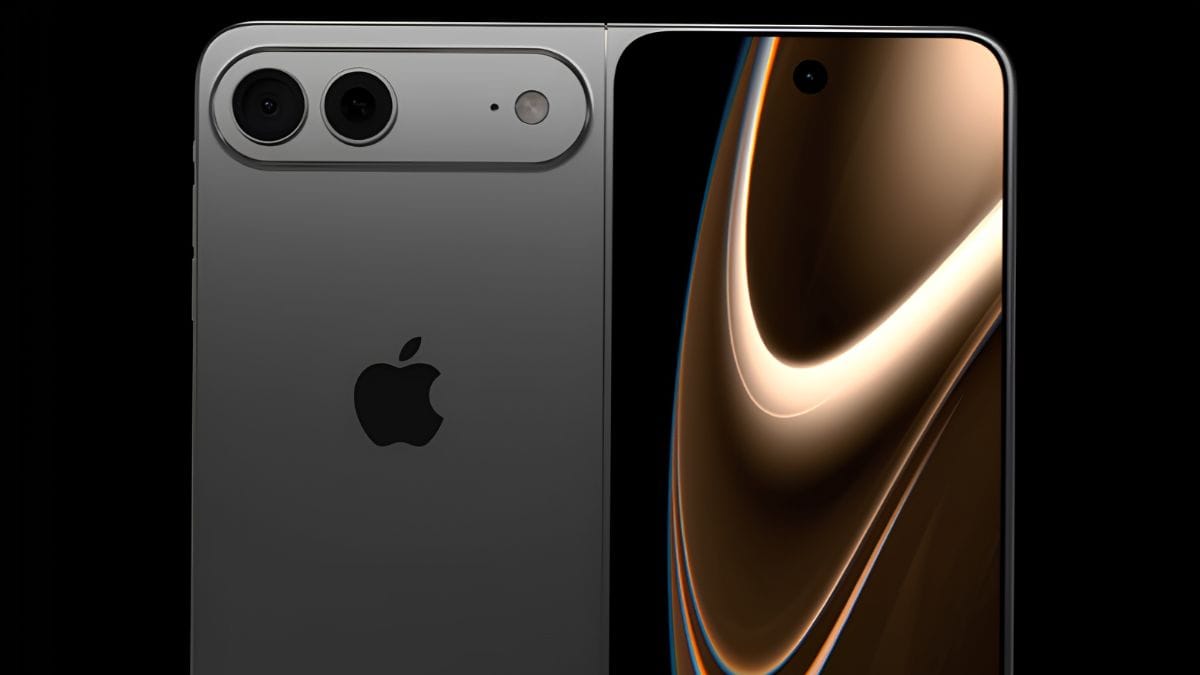
Apple is reportedly preparing to enter the foldable smartphone segment with a new device that may be branded as the iPhone Ultra. Expected to debut later this year, the device could introduce a key improvement over existing foldable phones: a crease-free display.
Recent reports suggest that Apple may achieve this through the use of a specialised adhesive technology designed to improve durability and visual smoothness.
The foldable iPhone, previously referred to as the iPhone Fold, is now expected to launch under the “Ultra” branding. It is likely to adopt a book-style folding design.
| Detail | Information |
|---|---|
| Device Name | iPhone Ultra (rumoured) |
| Category | Foldable smartphone |
| Expected Launch | September 2026 |
| Key Feature | Crease-free foldable display |
| Design | Book-style fold |
| Camera | Dual rear cameras (expected) |
The device is anticipated to launch alongside the iPhone 18 Pro lineup.

Technology
At the centre of this development is the use of optically clear adhesive (OCA), a material commonly used in display manufacturing. According to reports, Apple is optimising this adhesive to enhance the performance of its foldable screen.
OCA is typically used to bond layers such as display glass and protective films. Its transparency ensures that it does not affect visual clarity. However, Apple is said to be extending its use beyond conventional applications.
Adhesive
The reported innovation lies in how Apple is leveraging the viscoelastic properties of OCA. In simple terms, this means the material can behave both like a solid and a flexible substance depending on the stress applied.
| Property | Function |
|---|---|
| Transparency | Maintains display clarity |
| Elasticity | Adapts to folding stress |
| Bonding Strength | Holds layers securely |
| Stress Reduction | Minimises visible creases |
This combination of properties may allow the display to handle repeated folding without developing the visible crease typically seen in current foldable devices.
Mechanism
The adhesive is said to enable “dynamic modulation” of the display’s mechanical behaviour. Under pressure, such as when the phone is folded, the material becomes more flexible, allowing the layers to bend smoothly.
When the pressure is removed, the adhesive regains its structural strength, helping maintain a flat and stable display surface.
Additionally, the material can fill microscopic irregularities that develop over time due to repeated folding. This reduces stress concentration at specific points, which is a common cause of creases in foldable screens.
Benefits
If implemented effectively, this approach could offer several advantages:
- Reduced or nearly invisible crease on the display
- Improved durability over repeated folding cycles
- Enhanced visual consistency across the screen
- Lower light scattering, resulting in clearer visuals
These improvements could address one of the most common criticisms of foldable smartphones currently available in the market.
Design
The iPhone Ultra is expected to feature a book-style design, similar to existing foldable devices. Leaked renders indicate a wide internal display and a dual-camera setup on the rear.
While Apple is experimenting with new materials and technologies, the overall design language may remain consistent with its current product ecosystem.
Market
Apple’s entry into the foldable segment is likely to influence the broader smartphone market. Competitors have already introduced foldable devices, but challenges such as display creases and long-term durability remain.
By focusing on material innovation, Apple appears to be addressing these issues before entering the segment. This approach aligns with its strategy of refining existing technologies rather than introducing entirely new concepts prematurely.
Expectations
Although the technology appears promising, it remains unconfirmed until official announcements are made. The success of the crease-free display will depend on real-world performance and durability over time.
The device is expected to be unveiled in September 2026, alongside other flagship models. Until then, details regarding pricing, availability, and full specifications remain speculative.
Apple’s reported use of optically clear adhesive to achieve a crease-free foldable display highlights a material-focused approach to innovation. If successful, it could represent a meaningful step forward in foldable smartphone design. However, as with all pre-launch reports, these details should be viewed as indicative rather than final, with confirmation expected only at the time of launch.
FAQs
What is iPhone Ultra?
It is Apple’s rumoured foldable smartphone.
What makes its display unique?
It may offer a crease-free foldable screen.
What is OCA adhesive?
A transparent bonding material used in displays.
When will it launch?
Expected in September 2026.
Is the information confirmed?
No, it is based on leaks and reports.