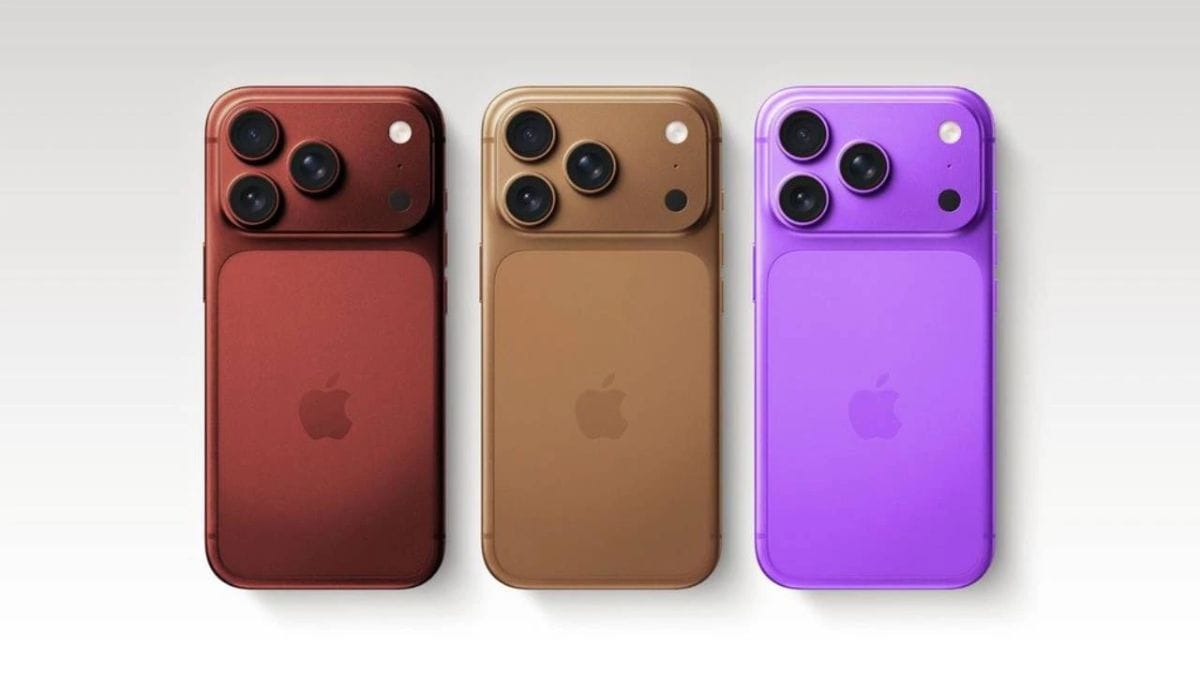
Early reports surrounding Apple’s upcoming iPhone 18 suggest a shift in how the company differentiates its standard and Pro models. While the launch is still months away, supply chain insights indicate that the gap between the base and Pro variants may widen further, particularly in display technology.
The development points to a continuation of Apple’s recent strategy of reserving newer hardware features for its premium lineup, while maintaining cost control in the standard models.
According to supply chain information shared by Schrödinger Intel, Apple is expected to use Samsung Display’s latest M16 OLED panels for the iPhone 18 Pro, iPhone 18 Pro Max, and a potential foldable iPhone. In contrast, the standard iPhone 18 and a possible iPhone 18e variant may not receive these upgrades.
Instead, Apple is reportedly considering older OLED materials such as M14 and a modified M12+ panel, with M12+ emerging as the more likely option.

Display
The M12+ panel is described as an improved version of the earlier M12 architecture. It offers incremental gains in brightness and efficiency compared to its predecessor, but remains behind newer generations such as M13, M14, and M16.
To understand the difference, here is a simplified comparison:
| OLED Material | Relative Generation | Key Characteristics |
|---|---|---|
| M12 | Older | Used in earlier Pro models |
| M12+ | Slight upgrade | Improved brightness, efficiency |
| M14 | Current | Used in iPhone 17 lineup |
| M16 | Latest | Expected in iPhone 18 Pro |
If this information is accurate, the iPhone 18 could use display technology that is not only behind its Pro counterparts but also behind the current iPhone 17 series.
Context
Apple introduced M14 panels across the iPhone 17 lineup, marking a consistent upgrade in display performance. A shift back to an older panel in the iPhone 18 would represent a change in direction.

Historically, Apple has maintained some level of parity between standard and Pro models in areas like display quality, even when differences existed in refresh rates or additional features. However, this reported move suggests a clearer separation in core hardware components.
Strategy
The reported decision appears to be driven by cost considerations. Using older display materials allows Apple to manage production expenses, especially at a time when component costs, including memory, are increasing.
By limiting high-end components to Pro models, Apple can maintain pricing stability for the base variants. The iPhone 18 is expected to launch at a similar price point to the iPhone 17, which started at Rs. 82,900 in India for the 256GB version.
This approach also aligns with the possibility of introducing a more affordable iPhone 18e variant, positioned closer to the standard model in terms of specifications.

Differentiation
The growing hardware gap between standard and Pro models reflects a broader product segmentation strategy. Apple has increasingly used features such as advanced chipsets, camera systems, and now display materials to distinguish its premium offerings.
If the iPhone 18 adopts the M12+ panel, the difference in display performance, including brightness levels, power efficiency, and longevity, could become more noticeable in everyday use.
Implications
For consumers, this shift could influence purchasing decisions. Users who prioritize display quality may find the Pro models more compelling, while those focused on overall value may still consider the standard variant sufficient.
At the same time, using older technology in a newer device may raise questions about long-term value, particularly when compared to previous-generation models that may offer similar or better hardware.
Outlook
While these details are based on early supply chain reports, they provide insight into Apple’s potential direction for the iPhone 18 lineup. The company appears to be balancing cost management with product differentiation, even if it means introducing older components in newer devices.
As the launch approaches, further clarity is expected regarding final specifications and positioning. For now, the iPhone 18 is shaping up to be a model that prioritizes pricing stability over hardware upgrades, while the Pro variants continue to carry the latest advancements.
FAQs
What display will iPhone 18 use?
It may use an older M12+ OLED panel.
Will iPhone 18 Pro get better display?
Yes, it is expected to use M16 OLED panels.
Is iPhone 18 behind iPhone 17?
It may lag in display compared to iPhone 17.
Why is Apple using older panels?
To control costs and maintain pricing.
What is expected price of iPhone 18?
It may launch near iPhone 17 pricing.