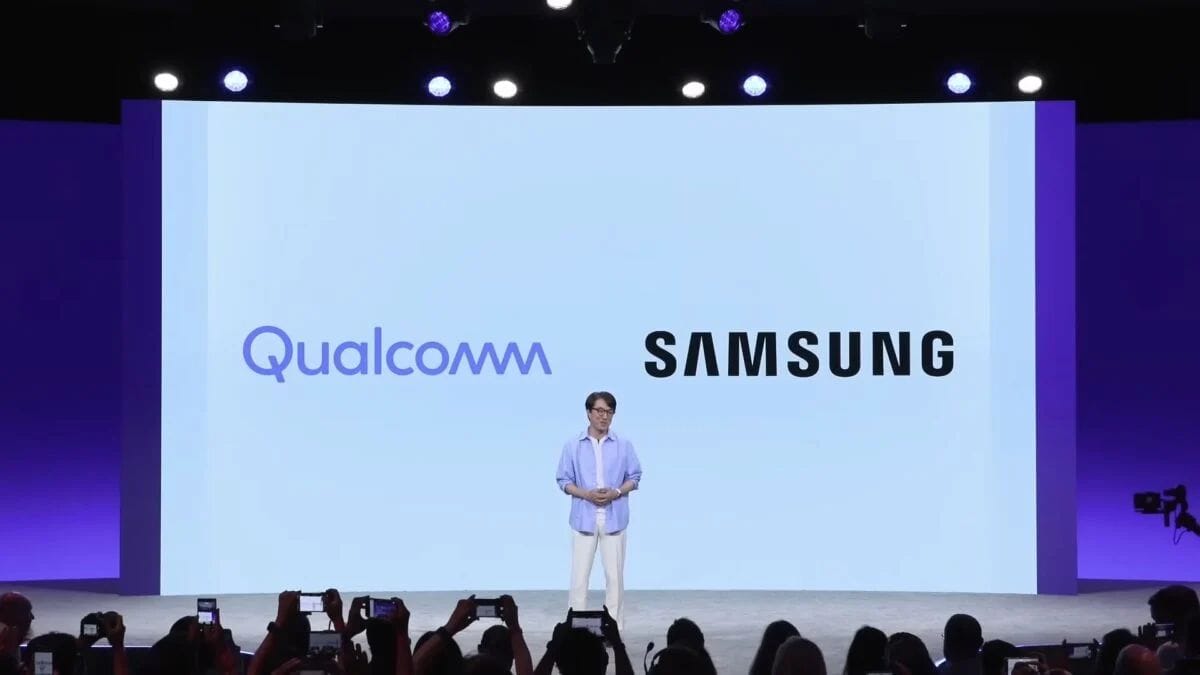
Qualcomm may be preparing for a significant shift in its chip manufacturing strategy as reports indicate renewed discussions with Samsung Foundry. After relying heavily on TSMC for recent flagship chipsets, the company is now exploring the possibility of producing its next-generation Snapdragon processors using Samsung’s 2nm process technology.
Context
According to reports, Qualcomm CEO Cristiano Amon recently visited South Korea to meet with Samsung executives. The discussions are said to focus on manufacturing the upcoming Snapdragon 8 Elite Gen 6 chipset using Samsung’s advanced 2nm fabrication process.
If an agreement is reached, it would mark Qualcomm’s return to Samsung’s foundry business for high-end chip production after several years of dependence on TSMC.
Shift
Qualcomm’s move appears to be driven by a combination of strategic and operational factors. One of the key considerations is diversification. By engaging both Samsung and TSMC, Qualcomm could reduce reliance on a single supplier.

Cost is another factor. TSMC’s advanced node manufacturing has become increasingly expensive, prompting chip designers to evaluate alternative partners. Samsung, aiming to strengthen its position in the foundry market, may offer competitive pricing.
Technology
Samsung’s 2nm process is central to these discussions. In recent years, Samsung faced challenges related to yield rates and thermal performance. However, improvements in manufacturing stability and efficiency have reportedly restored confidence among potential clients.
The transition to 2nm technology is expected to deliver gains in performance and power efficiency, which are critical for next-generation flagship smartphone processors.
A comparison of key aspects:

| Factor | TSMC (Current) | Samsung (Proposed) |
|---|---|---|
| Process Node | 3nm / Advanced | 2nm |
| Cost Structure | Higher | Potentially lower |
| Supplier Role | Primary | Secondary / Partner |
| Strategy | Single-source focus | Multi-source approach |
Meetings
In addition to Samsung, Cristiano Amon is also reported to have met executives from SK Hynix. These discussions are believed to focus on securing memory semiconductor supply.
Rising demand for memory, particularly driven by artificial intelligence workloads, has made supply chain coordination increasingly important for chipmakers.
Background
Qualcomm shifted its flagship chipset production to TSMC in 2022 due to concerns around Samsung’s manufacturing performance, particularly related to efficiency and heat management.
Since then, TSMC has been the primary manufacturing partner for Snapdragon processors. A potential return to Samsung suggests that earlier concerns may have been addressed to a satisfactory level.

Outlook
The Snapdragon 8 Elite Gen 6 chipset is expected to be unveiled later this year, likely during Qualcomm’s annual Snapdragon Summit, typically held between September and October.
If Samsung secures the manufacturing contract, the chipset could feature in upcoming flagship smartphones from major brands such as Samsung, Xiaomi, and OnePlus. Devices like the Galaxy S27, Xiaomi 18, and OnePlus 16 are expected to adopt this next-generation processor.
Market
This development reflects broader trends in the semiconductor industry. Chip designers are increasingly seeking flexibility in manufacturing partnerships to balance cost, performance, and supply chain resilience.
For Samsung, securing a high-profile client like Qualcomm for its 2nm process would strengthen its competitive position against TSMC. For Qualcomm, a dual-sourcing strategy could provide both economic and operational advantages.
The outcome of these discussions will likely influence not only future Snapdragon chipsets but also the competitive dynamics of the global semiconductor manufacturing landscape.
FAQs
Why is Qualcomm considering Samsung Foundry?
To reduce costs and diversify manufacturing.
What chip is being discussed?
Snapdragon 8 Elite Gen 6 chipset.
What process will Samsung use?
Advanced 2nm fabrication process.
When will the chip launch?
Expected around September or October.
Which phones may use this chip?
Galaxy S27, Xiaomi 18, OnePlus 16.